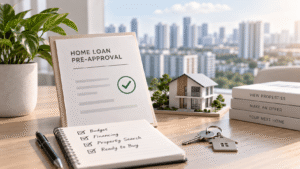

A mortgage Singapore buyers take out is simply a loan from a bank or financial institution that helps you purchase property, using the property itself as collateral until the loan is fully repaid. For most Singaporeans and permanent residents, a mortgage commonly referred to as a home loan Singapore buyers rely on is the single largest financial commitment they’ll ever make. Yet many first-time buyers still don’t fully understand how it works, what affects their interest rate, or how to compare packages.
This article, from the team at FinanceGuru, breaks down everything a beginner needs to know about getting a mortgage in Singapore, from the basic mechanics to choosing between an HDB loan and a bank loan, so you can make an informed decision from day one.
What Is a Mortgage in Singapore, Exactly?
At its core, a mortgage is a legal agreement. The bank lends you a sum of money to purchase your flat or condo, and in return, you agree to repay the loan over an agreed period usually 25 to 30 years with interest. If you fail to keep up with repayments, the lender has the legal right to repossess the property.
In Singapore, a mortgage isn’t limited to bank loans. If you’re buying an HDB flat, you can also apply for a housing loan Singapore residents get directly from the HDB itself, which comes with its own eligibility rules and interest structure.
How Does a Mortgage in Singapore Work?
Understanding the mechanics of a mortgage in Singapore helps you avoid surprises down the road.
The Loan Application Process
1. Get an Approval-in-Principle (AIP) – Before house-hunting, banks assess your income and credit history to indicate how much you can borrow.
2. Sign the Option to Purchase (OTP) – Once you’ve found a property, you exercise the OTP and formally apply for the loan.
3. Loan disbursement – The bank releases funds directly to the seller or developer, based on your property’s construction or purchase stage.
4. Monthly repayments begin – You start repaying the principal and interest according to your loan tenure.
Loan-to-Value (LTV) Limits
The Monetary Authority of Singapore (MAS) sets limits on how much you can borrow relative to the property’s value. Currently, most borrowers can finance up to 75% of the purchase price through a bank loan, meaning you’ll need to fund the remaining amount through cash and/or CPF savings. These limits directly affect how much mortgage Singapore banks will actually approve for you, so it’s worth checking your eligibility early.
HDB Loan vs Bank Loan: Which One Should You Choose?
This is one of the most common questions first-time buyers ask, and the answer depends on your financial profile.
HDB Loan:
● No compulsory cash down payment
● Rate pegged to the CPF Ordinary Account rate, plus a spread of 0.1% ● Only available for HDB flats
Bank Loan:
● Requires a minimum 5% cash down payment
● Offers both fixed and floating rate packages
● Rates are often lower than HDB’s, especially during low interest-rate periods ● Available for both HDB and private property loan Singapore purchases
The HDB loan vs bank loan decision really comes down to your risk appetite and cash flow. If you prefer stability. a HDB loan may suit you better. If you’re comfortable monitoring rate movements and want potentially lower interest costs, a bank loan could save you more over the loan tenure. Our Home Loans page breaks down current packages from multiple banks if you’d like to compare side by side.
Understanding Mortgage Interest Rates in Singapore
Mortgage interest rates Singapore lenders offer are influenced by several factors: the Singapore Overnight Rate Average (SORA), the bank’s internal cost of funds, and prevailing market competition among lenders.
Fixed vs Floating Rates
● Fixed-rate packages lock in your interest rate for 2–5 years, offering predictability but usually at a slightly higher starting rate.
● Floating-rate packages (typically SORA-pegged) fluctuate with the market, which can mean lower costs when rates are low, but added uncertainty when they rise.
Since rates change frequently, it’s wise to review the mortgage Singapore market at least once a year, especially if your existing rate is no longer competitive.
Exploring Your Options: HDB Flats and Private Property Loans
Whether you’re buying a resale flat, a BTO, or a private condominium, the financing structure differs slightly.
● HDB flats can be financed via an HDB loan or a bank loan, subject to eligibility.
● Private property loan Singapore applications are only available through banks, since HDB loans don’t cover private residential purchases.
● Executive Condominiums (ECs) follow private property loan rules once they reach the 10-year mark, though early-stage financing may differ.
Because private property loans often come with larger loan quantums, comparing packages carefully including lock-in periods and penalty clauses — matters even more.
How to Find the Best Mortgage Rates in Singapore
Finding the best mortgage rates Singapore banks offer isn’t just about picking the lowest headline number. Consider these factors together:
● Effective interest rate over the full loan tenure, not just the first year
● Lock-in period and penalties for early repayment or refinancing
● Legal and valuation subsidies offered by the bank
● Conversion flexibility if you want to switch packages within the same bank later
Comparing dozens of bank packages manually can be time-consuming, which is why many buyers work with a mortgage broker Singapore homeowners trust to shortlist suitable options based on their profile. A good broker also has access to a mortgage calculator Singapore buyers can use to estimate monthly instalments and total interest payable before committing. You can read our detailed Home Loan Singapore: The Complete 2026 Guide for a deeper walkthrough of current packages and eligibility criteria.
When Should You Consider Mortgage Refinancing in Singapore?
Your first mortgage package won’t necessarily be your best deal forever. Mortgage refinancing Singapore homeowners consider usually happens when they switch their existing loan to a new bank offering better terms, while home loan refinancing Singapore within the same bank (repricing) is also an option worth exploring.
Consider refinancing when:
● Your lock-in period has ended
● Interest rates have dropped significantly since you took your loan
● Your financial situation has changed and you need a different loan structure
● You want to consolidate or restructure existing debt
Refinancing at the right time can save thousands of dollars over your remaining loan tenure, so it’s worth reviewing your mortgage Singapore package every couple of years.
Common Mistakes First-Time Borrowers Make
● Focusing only on the interest rate and ignoring fees, lock-in terms, or subsidy clawbacks
● Overestimating affordability, without factoring in the Total Debt Servicing Ratio (TDSR) and Mortgage Servicing Ratio (MSR)
● Not comparing enough packages before committing
● Ignoring refinancing opportunities once the lock-in period ends
● Skipping professional advice, especially for private property loan Singapore applications with more complex structures
Frequently Asked Questions
1. What is the minimum down payment for a mortgage in Singapore? It’s typically 25%. For bank loans, it’s a minimum of 5% in cash, with the remainder payable via cash or CPF, subject to LTV limits.
2. Can foreigners get a home loan in Singapore? Yes, though eligibility, LTV limits, and interest rates for foreigners differ from those for citizens and PRs, and HDB loans are not available to foreigners.
3. How long does mortgage approval take in Singapore? An Approval-in-Principle usually takes a few working days, while full loan approval after signing the OTP typically takes up to one week.
4. Is it better to refinance with the same bank or switch banks? It depends on the rates offered. Repricing with your current bank is usually faster and cheaper, while switching banks may unlock better rates but involves legal and valuation costs.
5. How much can I borrow for a mortgage in Singapore? This depends on your income, existing debt obligations (TDSR/MSR), the property type, and current LTV limits, generally up to 75% of the property’s value for a first bank loan.
Final Thoughts
A mortgage Singapore buyers take on is a long-term commitment that shapes your finances for decades, so understanding the basics from HDB versus bank loans to interest rate structures and refinancing timing puts you in a much stronger position as a buyer. Whether you’re comparing your first home loan or considering refinancing an existing one, getting professional guidance can help you avoid costly mistakes and secure the most suitable package for your needs.
Ready to find the right mortgage in Singapore for your situation? Get a free, no-obligation consultation with FinanceGuru and let our specialists compare rates across 16 banks on your behalf.
GET YOUR FREE MORTGAGE ASSESSMENT →
FinanceGuru
12 Arumugam Road, #02-02B
LTC Building, Suite B,
Singapore 409958
Phone: +65 9890 9090