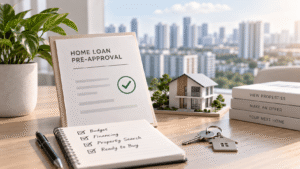

Finding the right home loan Singapore buyers can rely on is one of the most important financial decisions you’ll make this year, especially with interest rates, SORA benchmarks, and lending rules shifting constantly. This guide breaks down everything you need to know in 2026 — from eligibility and rates to choosing between HDB and bank financing.
At FinanceGuru, Singapore’s mortgage advisory team, we work with 16 banks and financial institutions daily, so this guide is built around the real questions our clients ask before signing a loan package.
What Is a Home Loan in Singapore?
A home loan in Singapore finances HDB flats, condominiums, executive condos, or landed property, offered either directly by HDB or through participating banks. Because a home loan Singapore applicant selects shapes repayments for decades, comparing packages upfront saves significant money long-term.
Home Loan Interest Rates Singapore 2026
Home loan interest rates Singapore borrowers see in 2026 continue shifting with global rate movements and the local SORA benchmark. Banks generally offer:
- Fixed-rate packages — locked for 1–5 years, offering repayment certainty
- Floating-rate packages — pegged to SORA plus a bank spread
- Board rate packages — increasingly rare today
Rates change monthly, so the best deal today may not be the best in three months — which is why comparing live rate sheets across banks matters more than trusting one advertised rate.
HDB Loan vs Bank Loan Singapore
One of the first decisions buyers face is HDB loan vs bank loan Singapore financing.
HDB Loan: Pegged at 0.10% above the CPF Ordinary Account rate, requires only 10% down payment (via CPF), but limited to HDB flats with an income ceiling.
Bank Loan: Often lower rates, but requires a 25% down payment (5% cash minimum), comes with lock-in periods, and covers HDB, private, and landed property.
Your choice depends on risk appetite, liquidity, and long-term property plans.
SORA Rate Home Loan Explained
The SORA rate home loan structure is now the industry standard, replacing SIBOR. SORA (Singapore Overnight Rate Average) reflects actual overnight lending transactions, making it more transparent. Most floating-rate mortgages are pegged to 1-month or 3-month compounded SORA plus a fixed spread, so instalments can rise or fall with the market.
Home Loan Eligibility Singapore
Home loan eligibility Singapore banks assess depends on:
- Citizenship/residency status — different loan quantum limits apply to Citizens, PRs, and foreigners
- Credit score — a strong repayment record improves approval odds; see our guide on credit history and home loan applications
- Existing property loans — affects your Loan-to-Value (LTV) limit
- Employment stability — self-employed applicants need extra documentation
TDSR and MSR Home Loan Singapore Requirements
TDSR MSR home loan Singapore rules directly cap borrowing:
- TDSR: All monthly debts, including the new loan, cannot exceed 55% of gross income
- MSR: For HDB/EC only — mortgage repayments cannot exceed 30% of gross income
Fixed vs Floating Rate Home Loan Singapore
Deciding on a fixed vs floating rate home loan Singapore package is a major choice. Fixed rates suit buyers wanting predictable repayments during the lock-in period. Floating rates, pegged to SORA, suit buyers comfortable with fluctuation for potentially lower costs. Model both using a home loan calculator Singapore tool before deciding.
How to Choose the Best Home Loan Singapore
There’s no single best home loan Singapore option — it depends on your property type and goals. Compare beyond the headline rate:
- Total interest cost across the full lock-in period
- Legal subsidy and cash rebate clawback clauses
- Repayment penalties and refinancing flexibility
Our home loan comparison service pulls live rate sheets from partner banks matched to your repayment profile.
Home Loan for First-Time Buyers Singapore
A home loan for first-time buyers Singapore application involves extra steps: check CPF Housing Grant eligibility, get an Approval-in-Principle before house-hunting, and compare at least three to four packages. Newcomers purchasing private or landed property should also review our guide on buying property as a foreigner in Singapore.
How to Refinance Home Loan Singapore
Many homeowners refinance home loan Singapore packages once their lock-in ends, since banks rarely offer existing customers their best rates automatically. Refinancing makes sense when rates have dropped, your lock-in has expired, or your financial goals have changed.
Home Loan Calculator Singapore
Using a home loan calculator Singapore tool before applying shows realistic monthly instalments, total interest, and how TDSR/MSR limits affect your maximum loan quantum.
FAQs About Home Loan Singapore
1. What’s the minimum down payment for a home loan in Singapore?
HDB loans need 10% (via CPF); bank loans need at least 25%, with 5% in cash.
2. How does SORA affect my home loan interest rate?
Floating-rate packages pegged to SORA adjust monthly repayments as the benchmark moves.
3. Can foreigners get a home loan in Singapore?
Yes, though foreigners face lower loan quantum limits and property restrictions.
4. When should I refinance my home loan?
Typically after your lock-in period ends, usually 2–5 years in.
5. How much can I borrow under TDSR and MSR?
TDSR caps total debt at 55% of income; MSR caps HDB/EC repayments at 30%.
Get Expert Home Loan Advice in Singapore
Choosing the right home loan Singapore package shouldn’t be guesswork. FinanceGuru’s advisors compare rates across 16 banks to match you with the right package — at no cost to you.
📍 Visit us: 12 Arumugam Road, #02-02B LTC Building, Suite B, Singapore 409958