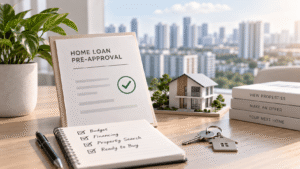

There’s no single best housing loan in Singapore that works for everyone, the right choice depends on your property type, income stability, and how much rate certainty you want. What works well for a first-time HDB buyer often looks nothing like what suits someone financing a private condo with a variable income.
This guide walks through how to match a housing loan to your actual situation, rather than chasing whichever rate happens to be trending this month.
What Makes a Housing Loan the “Best” One for You
Before comparing numbers, it helps to define what “best” actually means in your context. The best housing loan Singapore 2026 buyers are choosing isn’t necessarily the one with the lowest headline rate — it’s the one that balances rate, flexibility, and risk tolerance against your specific financial picture.
Three factors typically decide this:
- Your property type — HDB flat, executive condominium, or private property, since loan eligibility differs across each
- Your income stability — salaried employees and self-employed buyers often qualify for different loan structures
- Your risk appetite — whether you prioritise payment certainty or are comfortable riding market rate movements
How to Choose a Housing Loan in Singapore Step by Step
Knowing how to choose a housing loan in Singapore comes down to a structured comparison rather than picking the first attractive rate you see:
- Check your eligibility first. Confirm your TDSR, MSR (for HDB properties), and LTV limits before shortlisting packages.
- Decide between HDB and bank loans. This is often the biggest fork in the road for first-time buyers.
- Compare fixed and floating packages. Weigh rate certainty against potential savings.
- Look at the full cost, not just the rate. Legal subsidies, lock-in periods, and clawback clauses all affect the real cost.
- Get quotes from multiple banks. A wider comparison usually surfaces better terms than sticking with one bank.
HDB Loan vs Bank Loan Singapore: Which Fits Your Situation?
For many first-time buyers, the very first decision is HDB loan vs bank loan Singapore. Both come with meaningfully different trade-offs.
HDB loan advantages typically include:
- A fixed interest rate pegged at 0.1% above the CPF Ordinary Account rate, offering long-term predictability
- A higher Loan-to-Value limit, meaning a smaller upfront cash outlay
- More flexible repayment terms if you run into financial difficulty
Bank loan advantages typically include:
- Interest rates that are often lower than the HDB loan rate, especially during low-rate periods
- A wider range of fixed and floating packages to choose from
- The ability to refinance later for better terms, unlike an HDB loan
If you’re weighing this decision in more depth, our dedicated comparison on housing loan options: bank vs HDB explained covers the eligibility and cost differences in full.
Fixed vs Floating Rate Housing Loan Singapore: How to Decide
Once you’ve settled on HDB or bank financing, the next major decision is fixed vs floating rate housing loan Singapore options.
Fixed-rate packages lock in your interest rate for a set period, typically 2 to 5 years, shielding you from market rate increases during that window. The trade-off is that if rates fall, you won’t benefit until your fixed term ends.
Floating-rate packages move with a reference rate, such as SORA. These can offer lower starting rates but expose you to rate changes over time.
A practical middle ground many buyers use: choose a fixed rate if you value predictable monthly repayments, especially early in your loan tenure, and consider floating if you have some buffer in your budget to absorb rate fluctuations.
Understanding Housing Loan Interest Rates in Singapore
Housing loan interest rates in Singapore are shaped by a mix of global rate movements, the SORA benchmark, and each bank’s own funding costs. Rates aren’t static — they shift throughout the year, which is why the lowest interest rate housing loan Singapore has to offer today may not be the same package in six months.
This is exactly why comparing across multiple banks at the point of application matters more than relying on rates you saw advertised months earlier. A housing loan comparison Singapore buyers do at the time of application, rather than at the time of research, tends to produce more accurate results.
Housing Loan for First-Time Buyers in Singapore
If you’re navigating a housing loan for first-time buyers in Singapore, a few extra considerations apply:
- Grants and subsidies. HDB first-timers may qualify for CPF housing grants that reduce your effective loan amount.
- Simpler eligibility checks. Without an existing property loan, your TDSR calculation is generally more straightforward.
- Room to prioritise certainty. Many first-time buyers lean toward fixed-rate packages early on, since predictable repayments are easier to budget around while adjusting to homeownership costs.
Example: A first-time HDB buyer with stable salaried income and no other debt obligations is often well-positioned for either an HDB loan or a competitive bank fixed-rate package — the deciding factor usually comes down to whether they value the HDB loan’s flexibility or the bank loan’s typically lower rate.
Housing Loan Eligibility in Singapore: What Banks Check
Before you can compare packages meaningfully, it helps to understand housing loan eligibility in Singapore requirements. Lenders generally assess:
- Total Debt Servicing Ratio (TDSR) — your total monthly debt obligations shouldn’t exceed 55% of your gross income
- Mortgage Servicing Ratio (MSR) — applies specifically to HDB flats and executive condominiums, capped at 30% of gross income
- Loan-to-Value (LTV) limit — determines how much of the property price you can borrow versus paying in cash and CPF
- Credit history — a clean repayment record improves both approval odds and the rates you’re offered
Meeting these criteria comfortably usually puts you in a stronger position to access the best home loan package Singapore banks reserve for lower-risk borrowers.
Building Your Shortlist: A Practical Comparison Approach
Rather than comparing every package on the market, narrow your shortlist using this order:
- Confirm eligibility (TDSR, MSR, LTV) for both HDB and bank loans
- Decide HDB vs bank based on your risk tolerance and property type
- Shortlist 3 to 4 packages across fixed and floating structures
- Compare total cost, including legal subsidies and lock-in terms, not just the rate
This approach mirrors what we outline in more depth in our guide on choosing the best home loan for 2026, which walks through package selection criteria step by step.
Frequently Asked Questions
What is generally the best housing loan in Singapore for a first-time HDB buyer?
It depends on risk tolerance, but many first-time buyers choose either the HDB concessionary loan for its rate stability or a competitive bank fixed-rate package if they qualify and prefer a potentially lower rate.
Is a bank loan always cheaper than an HDB loan?
Not always. Bank loan rates fluctuate with the market and can sometimes rise above the HDB loan’s fixed rate, so it depends on timing and the specific package.
How do I know if I’m eligible for a housing loan in Singapore?
Eligibility is based on your TDSR, MSR (for HDB and EC properties), LTV limit, and credit history. A broker or bank can run this assessment for you before you commit to a package.
Should I choose a fixed or floating rate housing loan?
Choose fixed if you prioritise predictable monthly repayments, and floating if you’re comfortable with rate movements and want potential access to lower rates over time.
Can I switch from an HDB loan to a bank loan later?
Yes, this is possible through refinancing, though it’s a one-way move — you can’t switch back to an HDB loan once you’ve refinanced to a bank.
Compare Your Housing Loan Options Today
Finding the best housing loan in Singapore for your situation doesn’t have to mean comparing every bank yourself. At FinanceGuru, our advisors compare HDB and bank loan packages across 16 partner institutions to match you with terms suited to your property type and financial profile, at no cost to you.
Get a Free, No-Obligation Loan Assessment →
FinanceGuru
12 Arumugam Road, #02-02B
LTC Building, Suite B,
Singapore 409958
Contact: +65 9890 9090